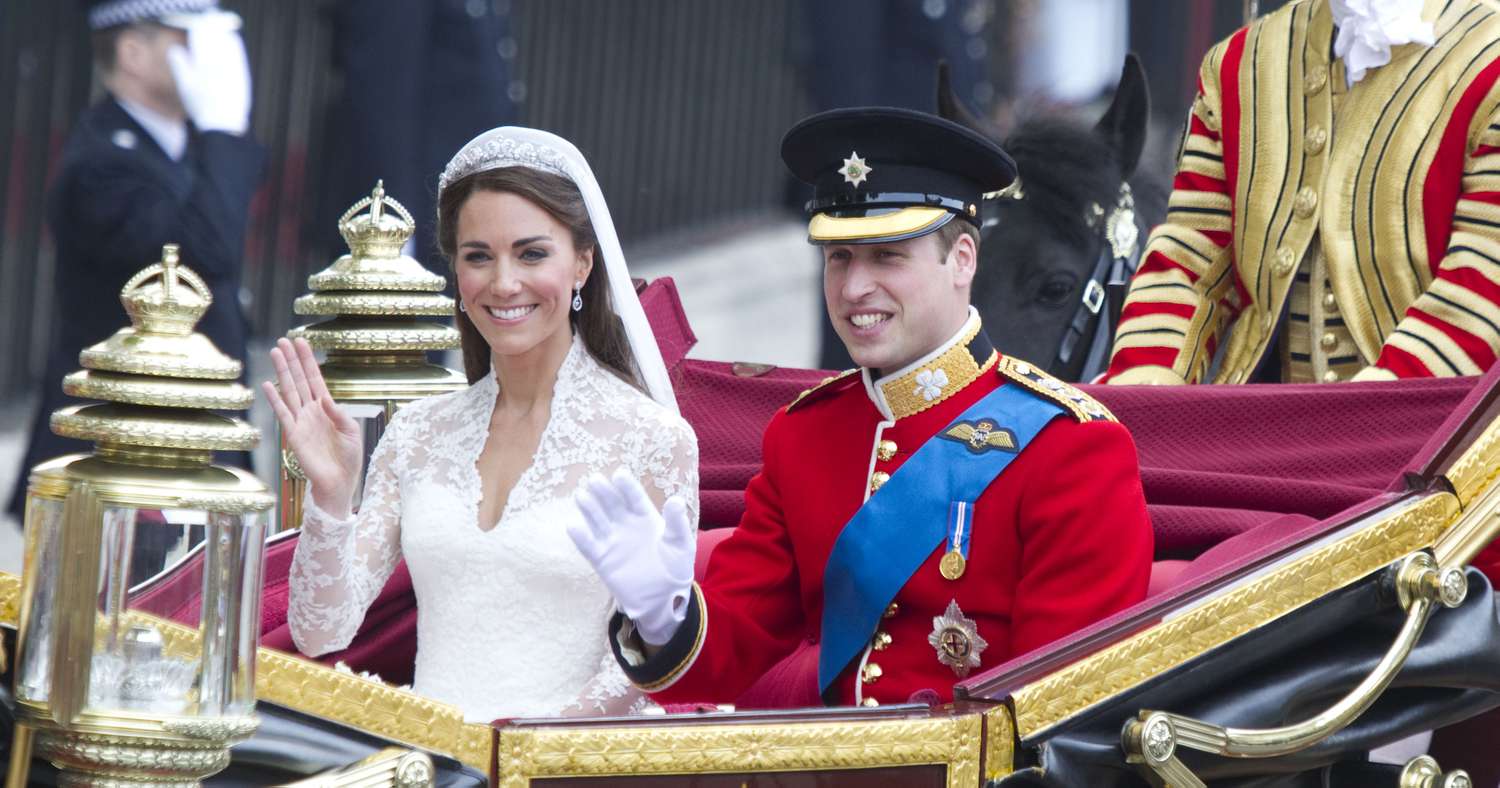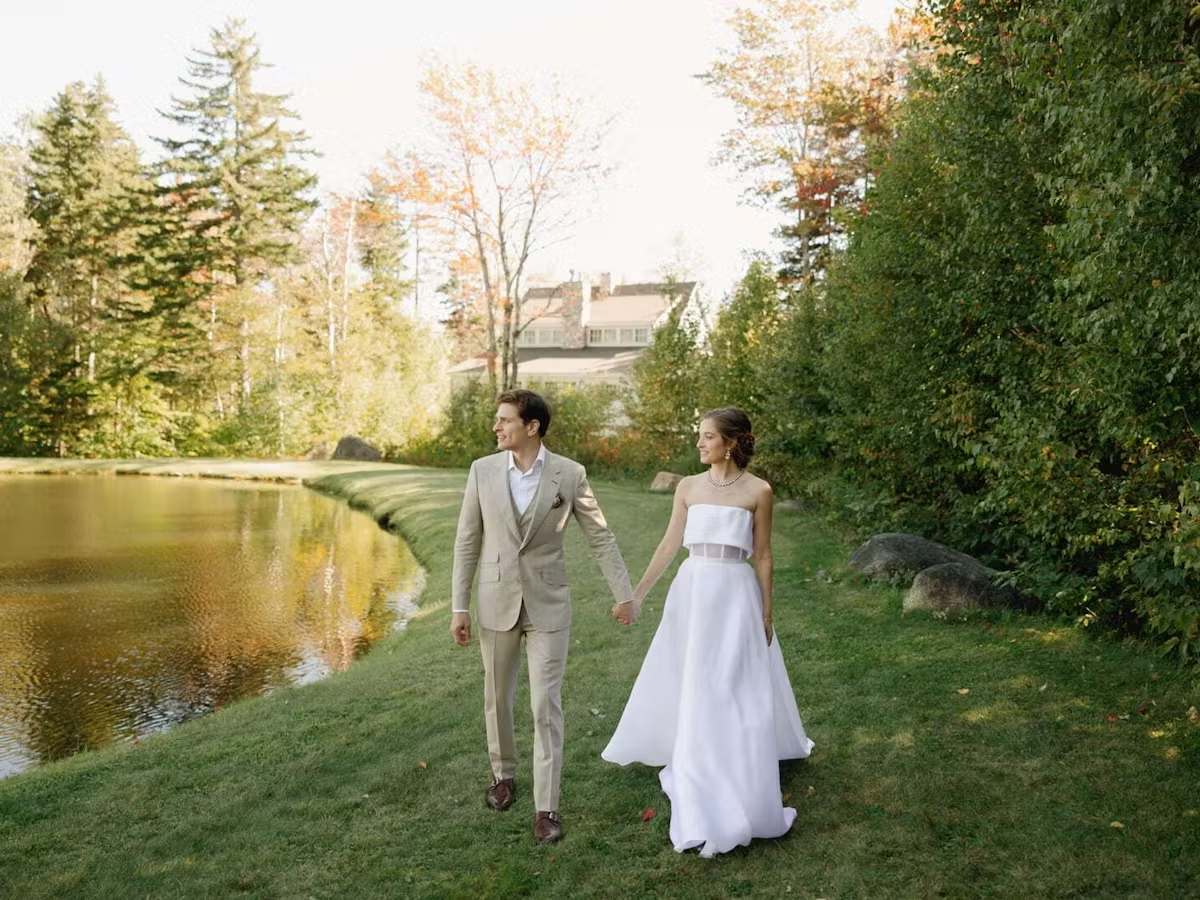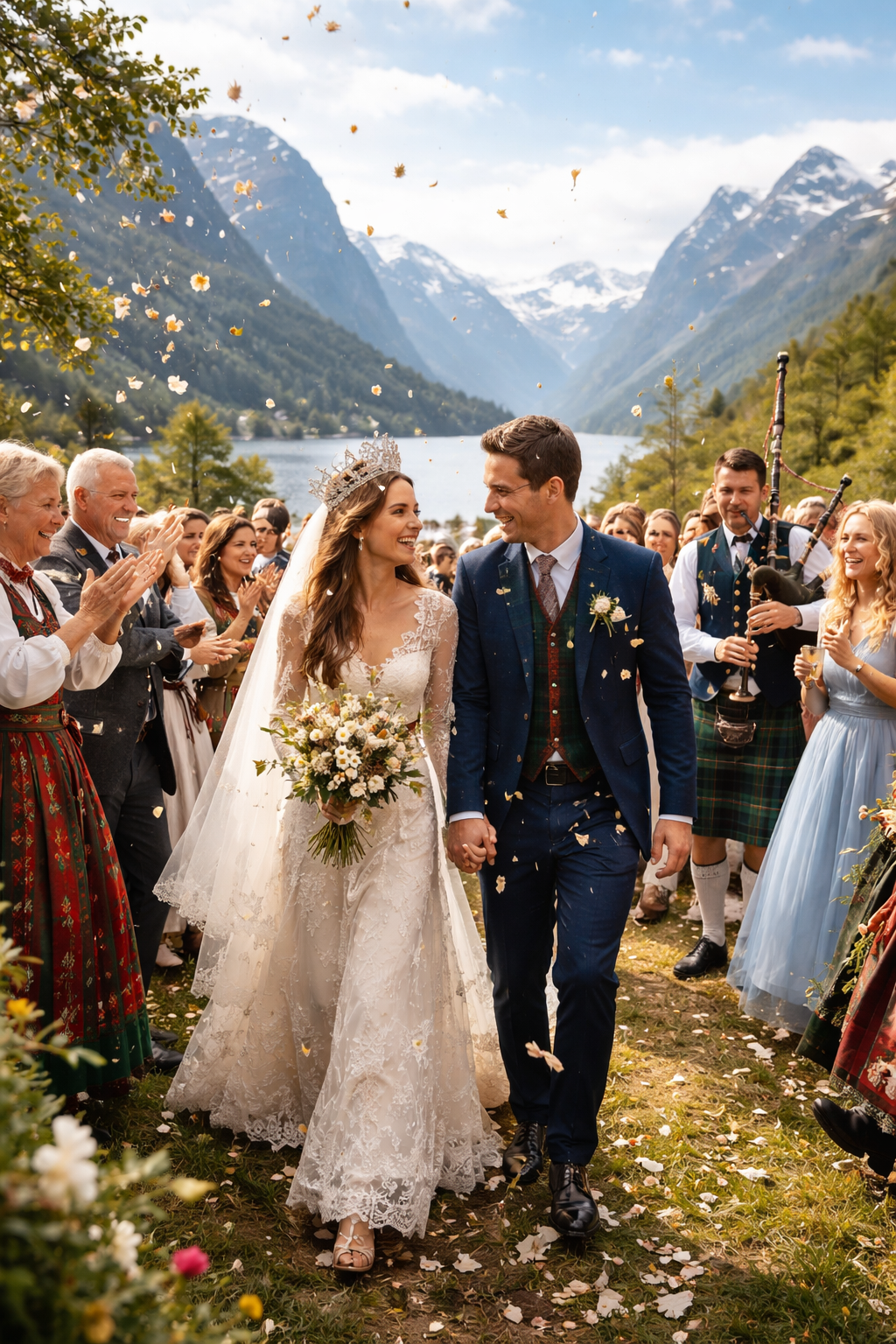
Weddings in northern countries are rich in history, symbolism, and natural beauty, reflecting cultures that deeply value tradition, equality, and community. In countries such as Norway, Sweden, Finland, Iceland, and Scotland, marriage is not simply a legal union but a meaningful celebration rooted in centuries of heritage. The landscapes of these regions—dramatic fjords, snow-covered mountains, deep forests, peaceful lakes, and ancient castles—create unforgettable settings for ceremonies. Nature is not just a backdrop; it is often considered a blessing and an essential part of the wedding experience, symbolizing purity, strength, and new beginnings.
In many northern cultures, wedding traditions are passed down through generations and continue to shape modern ceremonies. Traditional attire remains an important element. Norwegian brides may wear a regional bunad decorated with intricate embroidery and silver jewelry believed to bring protection and good fortune. In Scotland, the groom often wears a kilt in his family’s tartan, proudly representing his clan heritage and ancestral roots. Swedish wedding customs highlight partnership and equality, with both bride and groom entering the ceremony together as a sign of mutual respect. In Iceland, some couples incorporate ancient Norse readings or Viking-inspired blessings to honor their historical identity and cultural pride.
Seasonal influence plays a major role in northern weddings. Summer is especially popular because of the long daylight hours and, in some northern areas, the magical midnight sun that allows celebrations to continue late into the evening. Outdoor ceremonies near lakes, fjords, or countryside estates are common during this time. Winter weddings, however, carry their own charm. Snow-covered scenery, candlelit receptions, and warm wooden venues create a cozy and romantic atmosphere. In Iceland and northern Norway, couples may even hope for the appearance of the Northern Lights, adding a breathtaking natural display to their special day.
Community involvement is another defining feature of weddings in northern countries. Historically, entire villages would participate in the celebration, and festivities could last several days. Even today, guests play an active role through heartfelt speeches, traditional songs, and cultural dances. In Scandinavian countries, it is common for friends and family to give emotional and sometimes humorous toasts, sharing stories about the couple’s journey together. Music—whether traditional folk tunes or the sound of Scottish bagpipes—adds energy and cultural identity to the event.
Food is central to the celebration and reflects the local environment and culinary heritage. Wedding menus often include smoked salmon, cured meats, fresh seafood, roasted lamb, root vegetables, rye bread, and locally sourced dairy products. Desserts may feature berries such as lingonberries or cloudberries, which grow naturally in northern climates. The emphasis on fresh, seasonal, and locally produced ingredients shows the strong connection these societies maintain with nature and sustainability.
Modern northern weddings blend tradition with contemporary values. Many couples prioritize eco-friendly practices, choosing sustainable décor, seasonal flowers, and locally sourced catering. Minimalist design styles inspired by Scandinavian aesthetics are popular, featuring natural wood, soft colors, and simple elegance. Smaller, intimate gatherings are often preferred, focusing on meaningful connections rather than extravagant displays. Despite modern trends, the heart of northern weddings remains unchanged: a deep respect for family, cultural identity, equality, and the natural world.
Ultimately, weddings in northern countries represent more than a celebration of love between two individuals. They are powerful expressions of heritage, unity, and shared values. Whether held beneath the golden glow of the midnight sun, inside a historic castle, or surrounded by snow-covered mountains, these weddings reflect a timeless blend of romance, tradition, and natural beauty that continues to inspire couples around the world.
Deep Dive into Wedding Traditions in Northern Countries
Wedding traditions in northern countries are rich in symbolism, folklore, and centuries-old customs. In places like Norway, Sweden, Finland, Iceland, and Scotland, weddings are more than a celebration—they are a reflection of heritage, family honor, and community unity.
1. Pre-Wedding Traditions
Engagement and Courtship
In many Nordic cultures, engagements were historically simple and family-focused. Rather than elaborate proposals, couples often announced their intention to marry after gaining family approval. In rural communities, marriage symbolized not only love but also partnership in farming and household responsibilities.
In older Scandinavian traditions, the groom would present symbolic gifts to the bride’s family to show commitment and responsibility.
2. Traditional Wedding Attire
Folk Costumes (Bunad)
In Norway, brides and grooms may wear traditional clothing called bunad, which varies by region. These garments are often handmade and decorated with silver jewelry believed to protect against evil spirits.
Crowns and Headpieces
In Sweden and parts of Finland, brides traditionally wore a crown made of myrtle leaves or silver. The crown symbolized purity and new beginnings. In some villages, these crowns were family heirlooms passed down through generations.
Scottish Kilts
In Scotland, grooms traditionally wear kilts representing their clan tartan. This symbolizes pride in ancestry and family lineage. Bagpipes are commonly played as the bride walks down the aisle.
3. Ceremony Rituals
Handfasting (Scotland)
One of the oldest Celtic traditions is handfasting, where the couple’s hands are tied together with a ribbon or cloth to symbolize unity. The phrase “tying the knot” comes from this ritual.
Procession Traditions (Sweden)
In Sweden, both partners often walk down the aisle together, representing equality in marriage—an important value in Nordic societies.
Norse Blessings (Iceland)
Some Icelandic couples include ancient Norse blessings during the ceremony, honoring Viking heritage and seeking strength, loyalty, and prosperity.
4. Symbolic Customs
The Wedding Crown
In parts of Scandinavia, the bride’s crown would sometimes include small dangling ornaments that made noise. It was believed this sound would ward off evil spirits and protect the couple.
Bride’s Gifts
In Finland, the bride traditionally went door to door before the wedding, collecting small gifts in a pillowcase from neighbors—symbolizing community support.
The Sword Tradition (Norway)
Historically in Norway, the groom might carry a ceremonial sword, symbolizing protection and honor.
5. Wedding Feasts and Celebrations
Northern wedding receptions are known for being long and lively.
- Guests give heartfelt speeches.
- Traditional songs are sung.
- Toasts are frequent and meaningful.
- Dancing may include traditional folk dances.
In rural areas, wedding celebrations could last for several days, with the entire village participating.
6. Superstitions and Folklore
Northern weddings also include charming superstitions:
- Rain on the wedding day is considered good luck in some regions.
- Brides sometimes placed coins in their shoes for prosperity.
- Keeping a piece of bread in the wedding dress was believed to prevent hunger in marriage.
Cultural Values Behind the Traditions
What makes wedding traditions in northern countries special is their focus on:
- Equality between partners
- Strong family heritage
- Community involvement
- Respect for nature and ancestry
These traditions continue to influence modern weddings, even as celebrations become more contemporary and personalized.